SNAP Benefits 2026: Eligibility, Application & Max $281/Month

The Supplemental Nutrition Assistance Program (SNAP), commonly known as food stamps, is a vital federal program designed to help low-income individuals and families afford nutritious food. As we look towards 2026, understanding the eligibility requirements, application process, and potential benefit amounts is crucial for those seeking assistance. This comprehensive guide will walk you through everything you need to know about SNAP benefits 2026, ensuring you have the information necessary to secure up to $281 per month to support your household’s food needs.
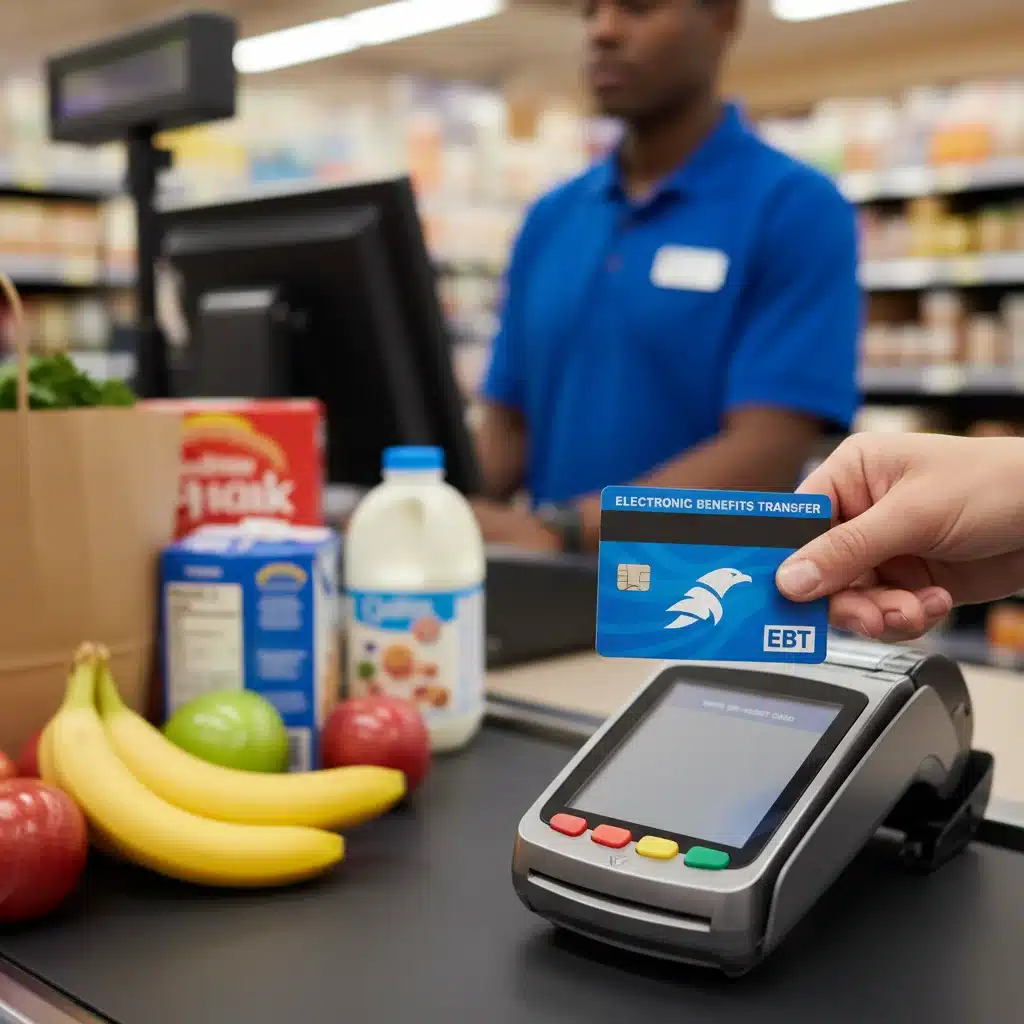
Food insecurity remains a significant challenge for many households across the United States. SNAP acts as a critical safety net, providing electronic benefits transferred to an EBT (Electronic Benefit Transfer) card, which can be used like a debit card to purchase eligible food items at authorized grocery stores, farmers’ markets, and even some online retailers. The program aims not only to alleviate hunger but also to promote better health outcomes by enabling access to a wider variety of healthy foods. With potential adjustments to income thresholds and benefit levels, staying informed about SNAP benefits 2026 is more important than ever.
Understanding SNAP Benefits 2026 Eligibility Criteria
Eligibility for SNAP benefits 2026 is primarily determined by a combination of income, household size, and certain asset limits, though asset limits are waived for most households. The specific criteria can vary slightly by state, as states have some flexibility in administering the program within federal guidelines. However, the core principles remain consistent nationwide. It’s important to remember that these guidelines are subject to change annually, so the information provided here reflects the most current projections and general rules for 2026, based on historical adjustments and federal mandates.
Income Requirements for SNAP Benefits 2026
For most households, eligibility for SNAP benefits 2026 is based on two income tests: gross monthly income and net monthly income. Gross monthly income refers to a household’s total income before any deductions, while net monthly income is the gross income minus allowable deductions. Generally, a household’s gross monthly income must be at or below 130% of the federal poverty level (FPL), and its net monthly income must be at or below 100% of the FPL.
Let’s break down what this means in practical terms. The Federal Poverty Level (FPL) is determined annually by the Department of Health and Human Services. For 2026, while exact figures are not yet released, we can estimate based on previous years’ adjustments. For instance, if the FPL for a single-person household is projected to be around $15,060 annually ($1,255 monthly), then 130% of that would be approximately $1,631.50 per month. For a family of four, if the FPL is around $31,200 annually ($2,600 monthly), then 130% would be approximately $3,380 per month.
It’s crucial to note that these are estimates. The actual FPL figures for 2026 will be released closer to the fiscal year. Households with an elderly or disabled member often have different income thresholds, typically only needing to meet the net income test (100% FPL) without the gross income limit.
Allowable Deductions that Impact SNAP Benefits 2026
To calculate your net income, several deductions can be applied to your gross income. These deductions are critical as they can help more households qualify for SNAP benefits 2026. Common deductions include:
- Standard Deduction: A fixed amount based on household size, which is subtracted from your gross income. This amount changes annually.
- Earned Income Deduction: 20% of any earned income (wages, salaries) is disregarded. This encourages work while providing assistance.
- Dependent Care Deduction: Costs for childcare or care for other dependents when necessary for work, training, or education.
- Medical Expense Deduction: For elderly (age 60+) or disabled household members, out-of-pocket medical expenses exceeding a certain amount (e.g., $35) per month can be deducted.
- Shelter Deduction: Housing costs (rent, mortgage, property taxes, utilities) that exceed 50% of your household’s income after all other deductions. This deduction is capped for most households but unlimited for elderly or disabled individuals.
- Child Support Payments: Legally obligated child support payments made to a non-household member.
Household Definition for SNAP Benefits 2026
A ‘household’ for SNAP benefits 2026 purposes is generally defined as all individuals who live together and customarily purchase and prepare food together. There are some exceptions:
- Spouses and children under 22 living with their parents must be considered part of the same household.
- Elderly or disabled individuals who cannot purchase and prepare food separately due to their condition may be considered separate households if they live with others but receive separate income.
Asset Limits for SNAP Benefits 2026
For most households, there are no asset limits to qualify for SNAP benefits 2026. However, some states may impose asset limits, particularly for households that do not include an elderly or disabled member. For households with an elderly (age 60+) or disabled member, the asset limit is typically higher (e.g., $4,250 in 2024, likely to be similar or slightly higher in 2026). For other households, the asset limit is usually lower (e.g., $2,750 in 2024). Assets include resources like bank accounts, cash on hand, and certain vehicles, but generally exclude the home you live in and one vehicle per adult.
Work Requirements for SNAP Benefits 2026
Most able-bodied adults without dependents (ABAWDs) between 18 and 52 years old are subject to work requirements to receive SNAP benefits 2026. These individuals can only receive SNAP for three months in a three-year period unless they are working or participating in a work program for at least 20 hours per week. Exemptions exist for various reasons, including pregnancy, caring for a child, or a medical condition. States can also request waivers for these requirements in areas with high unemployment.
How to Apply for SNAP Benefits in 2026: A Step-by-Step Guide
Applying for SNAP benefits 2026 involves several steps, but the process is designed to be as straightforward as possible. While the exact methods may vary by state, the general procedure remains consistent. It’s important to gather all necessary documentation before you begin to streamline the application process.
Step 1: Gather Necessary Documents
Before starting your application for SNAP benefits 2026, collect the following documents for all household members:
- Proof of Identity: Driver’s license, state ID, passport, or birth certificate.
- Proof of Residency: Utility bill, rental agreement, or mail with your current address.
- Proof of Income: Pay stubs, employer statements, benefit letters (Social Security, unemployment, disability), or self-employment records.
- Proof of Assets (if applicable): Bank statements, retirement account statements (if applicable to your state’s rules).
- Proof of Expenses: Rent/mortgage statements, utility bills, medical bills (for elderly/disabled), childcare receipts, and child support payment records.
- Social Security Numbers: For all household members applying for benefits (exceptions apply for non-citizens not seeking benefits for themselves).
- Immigration Status Documentation: For non-citizen applicants.
Having these documents ready will significantly speed up the application process and reduce the need for follow-up requests from the SNAP agency.
Step 2: Choose Your Application Method
Most states offer multiple ways to apply for SNAP benefits 2026:
- Online: The quickest and most common method. Visit your state’s Department of Social Services or Human Services website. Many states have a dedicated online portal for benefit applications.
- In Person: Visit your local SNAP office or social services agency. You can pick up an application, fill it out, and submit it on-site.
- By Mail: Download an application form from your state’s website, fill it out, and mail it to the appropriate local office.
- By Phone: Some states allow you to complete an initial application over the phone, or they can mail you an application.
It is generally recommended to apply online if possible, as it often provides immediate confirmation of submission and allows for easy uploading of supporting documents.
Step 3: Complete the Application Form
Fill out the application completely and accurately. Provide all requested information about your household members, income, expenses, and resources. Be honest and thorough, as any discrepancies could delay your application or lead to issues later on. If you need assistance filling out the form, don’t hesitate to ask for help from the SNAP office staff or a community organization.
Step 4: The Interview Process
After submitting your application for SNAP benefits 2026, you will typically be contacted for an interview. This interview can be conducted over the phone, in person, or in some cases, waived. The purpose of the interview is for a SNAP caseworker to review your application, clarify any information, and verify your eligibility. Be prepared to answer questions about your household, income, and expenses. This is also an opportunity for you to ask any questions you might have about the program.
Step 5: Verification and Decision
Following the interview, the SNAP agency will verify the information you provided. This may involve contacting employers, landlords, or other sources. You may be asked to provide additional documentation if anything is unclear or missing. Once all information is verified, the agency will make a decision on your eligibility for SNAP benefits 2026. Federal regulations require a decision to be made within 30 days of the application date (or 7 days for expedited processing cases).
Step 6: Receiving Your EBT Card
If approved, you will receive an EBT card in the mail, usually within a few weeks. This card will be loaded with your monthly SNAP benefits. You will also receive instructions on how to activate your card and how to use it. Remember to keep your EBT card and PIN secure, as they are essential for accessing your benefits.
Calculating Your Potential SNAP Benefits 2026: Up to $281 Per Month
The maximum monthly SNAP benefits 2026 amount you can receive depends on your household size and income. The maximum benefit amounts are adjusted annually based on the cost of living. While the exact figures for 2026 are not yet finalized, we can use the 2024 maximums as a strong indicator, as adjustments typically reflect inflation and economic changes.
For a single-person household, the maximum monthly SNAP benefit in 2024 was $291 in the 48 contiguous states and D.C. This amount is subject to slight variations for Alaska, Hawaii, Guam, and the U.S. Virgin Islands due to higher cost of living. While the specific figure for 2026 might see a slight increase or decrease, the $281 figure mentioned in the prompt is a reasonable estimate within the typical range for a single individual or a small household, especially considering the deductions that can increase your net benefit.
Factors Influencing Your Benefit Amount
Your actual benefit amount for SNAP benefits 2026 is calculated by a formula that takes into account your household’s net income. The general formula is: (Maximum Benefit Amount for Household Size) – (30% of Household’s Net Income). This means that for every dollar of net income your household has, your SNAP benefits are reduced by 30 cents.
For example, if the maximum benefit for your household size is $281, and your household’s net monthly income is $500, the calculation would be: $281 – (0.30 * $500) = $281 – $150 = $131. In this scenario, your household would receive $131 in SNAP benefits 2026.
The more deductions you qualify for, the lower your net income will be, and consequently, the higher your SNAP benefit amount will be, up to the maximum for your household size. This is why accurately reporting all eligible deductions is so important during the application process.
Minimum Benefit Amounts for SNAP Benefits 2026
Even if your calculated benefit amount is very low, most states have a minimum benefit amount for certain households, usually around $23-$25 per month. This ensures that even households with some income still receive a baseline level of assistance.
Key Updates and Considerations for SNAP Benefits in 2026
The landscape of federal assistance programs is dynamic, with potential legislative changes, economic shifts, and administrative adjustments occurring regularly. Staying informed about these potential updates is key for current and prospective recipients of SNAP benefits 2026.
Potential Policy Changes
While specific legislative changes for 2026 are speculative, ongoing discussions often revolve around work requirements, eligibility criteria for certain populations (e.g., college students, immigrants), and the overall funding of the program. Any significant changes would likely come from the Farm Bill, which is reauthorized every five years and includes provisions for SNAP. Advocates often push for expansions, while others may seek stricter controls. These debates can influence who qualifies and how much assistance they receive from SNAP benefits 2026.
Economic Factors and Inflation
The maximum benefit amounts for SNAP benefits 2026 are adjusted annually to account for inflation. If inflation rates remain high, we might see a more significant increase in maximum benefit amounts and potentially in the federal poverty levels, which directly impacts income eligibility thresholds. Conversely, periods of low inflation might lead to smaller adjustments.
State-Specific Programs and Waivers
States have some flexibility in how they administer SNAP. For example, some states offer additional benefits or programs that complement federal SNAP, such as state-funded food assistance programs or specific initiatives for certain demographics. States can also apply for waivers from federal requirements, such as the ABAWD work requirements, particularly in areas experiencing high unemployment. It’s always advisable to check your specific state’s SNAP agency website for localized information on SNAP benefits 2026.
Online Purchasing Expansion
The ability to use SNAP benefits 2026 for online grocery purchases has expanded significantly in recent years. This trend is expected to continue, offering greater convenience and access to food for recipients, especially those with transportation challenges or in rural areas. More retailers are likely to become authorized for online EBT payments, making it easier to utilize your benefits.
Maximizing Your SNAP Benefits in 2026
Once approved for SNAP benefits 2026, there are several ways to ensure you are making the most of your assistance and maintaining your eligibility.
Report Changes Promptly
It is crucial to report any changes in your household circumstances to your local SNAP office within 10 days of the change. This includes changes in income, household size, address, or significant changes in expenses. Failure to report changes can lead to overpayments (which you may have to pay back) or underpayments of benefits. Timely reporting ensures your SNAP benefits 2026 are accurately calculated.
Understand Your Rights and Responsibilities
Familiarize yourself with the rules and regulations of the SNAP program. Understand what you can and cannot purchase with your EBT card. For example, SNAP benefits can be used for most food items, including fruits, vegetables, meat, dairy products, bread, and cereals. They cannot be used for alcohol, tobacco, hot prepared foods (unless in a specific restaurant meal program for the homeless, elderly, or disabled), or non-food items like pet food, cleaning supplies, or vitamins.
Utilize Other Assistance Programs
SNAP benefits 2026 are often just one piece of a larger puzzle of social services. Many households eligible for SNAP may also qualify for other programs such as Medicaid, Temporary Assistance for Needy Families (TANF), housing assistance, or utility assistance programs. Exploring these complementary programs can provide a more holistic support system for your household.
Participate in Nutrition Education
Many states offer free nutrition education programs (SNAP-Ed) to help recipients make healthy food choices, prepare nutritious meals, and manage their food budgets. These programs can be invaluable for maximizing the health impact of your SNAP benefits 2026.
Recertification Process for SNAP Benefits 2026

SNAP benefits are not indefinite; you will need to recertify periodically to continue receiving them. The recertification period typically ranges from 6 to 12 months, depending on your state and household circumstances. You will receive a notice when it’s time to recertify. The recertification process is similar to the initial application, requiring you to update your information and potentially undergo another interview. Timely recertification is crucial to avoid any lapse in your SNAP benefits 2026.
Frequently Asked Questions About SNAP Benefits 2026
Q1: Can non-citizens receive SNAP benefits in 2026?
A: Yes, some non-citizens may be eligible for SNAP benefits 2026, including lawful permanent residents (green card holders) who have been in the U.S. for five years, refugees, asylees, and certain other qualified immigrants. However, eligibility rules for non-citizens are complex, and it’s best to consult with your local SNAP office or an immigration legal aid service.
Q2: What if my income changes after I apply for SNAP benefits?
A: You are required to report changes in your income to your SNAP office, usually within 10 days of the change. Depending on the significance of the change, your SNAP benefits 2026 may be adjusted accordingly.
Q3: Can I use my EBT card to buy hot food or restaurant meals?
A: Generally, no. SNAP benefits cannot be used to purchase hot food prepared for immediate consumption or restaurant meals. However, some states participate in the Restaurant Meals Program (RMP), which allows certain eligible SNAP recipients (elderly, disabled, or homeless) to use their EBT cards at participating restaurants. Check with your state’s SNAP agency if the RMP is available where you live.
Q4: Are college students eligible for SNAP benefits in 2026?
A: College students between the ages of 18 and 49 who are enrolled at least half-time generally have stricter eligibility requirements for SNAP benefits 2026. They must meet an exemption, such as working 20 hours a week, participating in a state or federal work-study program, having a dependent child under 6, or receiving TANF benefits, among others. These rules are periodically reviewed and can change.
Q5: How long does it take to get approved for SNAP benefits?
A: Federal regulations mandate that a decision on your SNAP application must be made within 30 days of the date you submit it. For households with very low income and few resources (expedited processing), a decision must be made within 7 days.
Q6: What happens if I move to a different state while receiving SNAP benefits?
A: If you move to a different state, your SNAP benefits 2026 will not automatically transfer. You will need to close your case in your old state and reapply for SNAP benefits in your new state of residence. Eligibility requirements and benefit amounts can vary by state.
Conclusion
Navigating the world of government assistance can seem daunting, but understanding the specific requirements and processes for SNAP benefits 2026 is the first step towards securing vital food assistance for your household. From income and asset limits to the detailed application process and potential benefit amounts, this guide has aimed to provide a clear, comprehensive overview. Remember, the program is designed to be a safety net, ensuring that no individual or family goes hungry.
By carefully gathering your documents, accurately completing your application, and promptly reporting any changes, you can ensure a smoother experience and maximize your chances of receiving the full support you’re entitled to. The potential to receive up to $281 per month can make a significant difference in a household’s food budget, contributing to better health and well-being. Stay informed about any future updates to SNAP policies and leverage available resources to make the most of your SNAP benefits 2026.