
Understanding the landscape of disability benefits in the United States can be a daunting task, especially when trying to navigate the distinctions between Supplemental Security Income (SSI) and Social Security Disability Insurance (SSDI). As we look ahead to 2026, it’s more critical than ever to grasp these differences to ensure you or your loved ones receive the maximum financial support available. This comprehensive guide, focused on ‘SSI vs SSDI 2026’, aims to demystify these programs, clarify eligibility criteria, streamline the application process, and offer strategies to optimize your benefits.
The Social Security Administration (SSA) oversees both SSI and SSDI, but they serve different populations with distinct funding mechanisms and eligibility requirements. While both provide vital financial lifelines to individuals unable to work due to a disability, misunderstanding their nuances can lead to delays or even denials of much-needed assistance. This article will delve deep into each program, offering a comparative analysis tailored for the year 2026, taking into account any potential legislative changes or cost-of-living adjustments (COLAs) that may impact benefits.
Understanding Social Security Disability Insurance (SSDI) for 2026
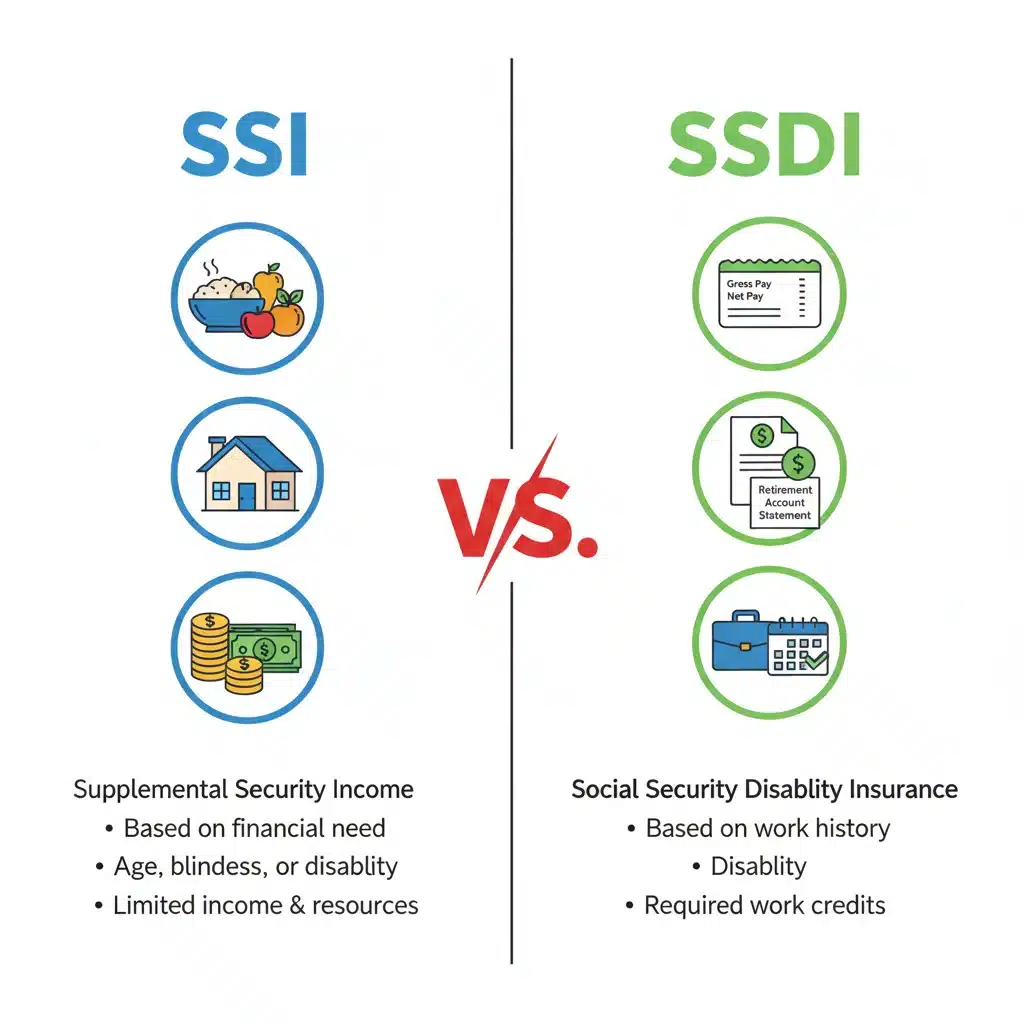
SSDI is an earned benefit program. Think of it as an insurance policy you’ve paid into through your payroll taxes over your working life. When you work, a portion of your FICA (Federal Insurance Contributions Act) taxes goes towards Social Security, which includes funding for SSDI. This means that to be eligible for SSDI, you must have a sufficient work history and have accumulated enough "work credits."
SSDI Eligibility Criteria: Work Credits and Disability Definition
For 2026, the core eligibility for SSDI will largely remain consistent. The primary requirements include:
- Work Credits: You must have worked long enough and recently enough under Social Security. The number of work credits needed depends on your age when your disability began. Generally, you need 40 credits, with 20 of them earned in the last 10 years ending with the year you became disabled. Younger workers may qualify with fewer credits. Each year, the amount of earnings required for one work credit changes. For 2026, while the exact figure isn’t set, it will likely see a slight increase from previous years. It’s crucial to check the SSA’s official website for the most up-to-date work credit requirements.
- Disability Definition: The SSA has a very specific and strict definition of disability. To qualify, you must have a medical condition that meets the following criteria:
- You cannot do work that you did before.
- You cannot adjust to other work because of your medical condition.
- Your disability has lasted or is expected to last for at least one year or to result in death.
It’s important to understand that the SSA does not consider partial disability or short-term disability. Your condition must prevent you from engaging in "substantial gainful activity" (SGA). The SGA limit is a monetary amount that changes annually; for 2026, this figure will likely be higher than current levels. If your monthly earnings exceed the SGA limit, you are generally not considered disabled by the SSA.
How SSDI Benefits are Calculated in 2026
SSDI benefits are based on your average lifetime earnings before your disability began. This is known as your "primary insurance amount" (PIA). The higher your earnings over your working life, the higher your potential SSDI benefit will be. Unlike SSI, which has a federal maximum, SSDI benefits can vary significantly from person to person. The SSA uses a complex formula to calculate your PIA, taking into account your indexed earnings. For 2026, any Cost-of-Living Adjustment (COLA) announced for Social Security benefits will also apply to SSDI payments, potentially increasing the monthly amount recipients receive.
Other Important SSDI Considerations for 2026
- Medicare Eligibility: After receiving SSDI benefits for 24 months, you automatically become eligible for Medicare, regardless of your age. This is a significant advantage of SSDI, providing essential health coverage.
- Family Benefits: Certain family members may also be eligible for benefits based on your work record, including spouses, divorced spouses, and children.
- Trial Work Period (TWP) and Work Incentives: The SSA offers various work incentives to encourage SSDI recipients to return to work, if possible. The Trial Work Period allows you to test your ability to work for at least nine months while still receiving full benefits. Understanding these incentives will be crucial for those considering a return to the workforce in 2026.
Exploring Supplemental Security Income (SSI) for 2026
SSI is a needs-based program designed to provide financial assistance to aged, blind, or disabled individuals who have limited income and resources, regardless of their work history. It is funded by general tax revenues, not by Social Security taxes.
SSI Eligibility Criteria: Income and Resource Limits
For 2026, the primary eligibility factors for SSI will continue to revolve around your financial situation and your disability status:
- Limited Income: Your "countable income" must be below a certain federal limit. Not all income is counted; the SSA has specific rules for what is considered income and what deductions apply. For instance, a portion of earned income is typically disregarded. The federal benefit rate (FBR) for 2026, which is the maximum federal SSI payment, will be announced later in 2025 and will likely reflect a COLA.
- Limited Resources: Your "countable resources" (assets) must not exceed $2,000 for an individual or $3,000 for a couple. Resources include cash, bank accounts, stocks, and other property that can be converted to cash. However, certain assets are excluded, such as your home, one vehicle, household goods, and personal effects. Understanding these exclusions is vital for SSI eligibility in 2026.
- Disability Definition: The SSA uses the same strict definition of disability for SSI as it does for SSDI. You must have a medical condition that prevents you from engaging in substantial gainful activity, and that has lasted or is expected to last for at least one year or result in death.
How SSI Benefits are Determined in 2026
The maximum federal SSI payment for 2026 will be the Federal Benefit Rate (FBR), adjusted annually for COLA. Your actual SSI payment may be lower than the FBR if you have other countable income. Many states also provide a state supplementary payment (SSP) in addition to the federal SSI payment, which can vary significantly by state. It’s important to research the specific SSI and SSP rates for your state for 2026.
Key SSI Features for 2026
- Medicaid Eligibility: In most states, receiving SSI automatically qualifies you for Medicaid, providing crucial health coverage. This is a major benefit for many SSI recipients.
- No Work History Required: Unlike SSDI, you do not need to have a work history to qualify for SSI. This makes it a vital program for individuals who become disabled early in life or who have not had the opportunity to work consistently.
- Living Arrangements: Your living arrangements can impact your SSI benefits. For example, if you live in someone else’s household and do not pay your fair share of food and shelter, your SSI payment may be reduced.
SSI vs SSDI 2026: A Comparative Analysis
Now that we’ve outlined the individual characteristics of each program, let’s directly compare SSI and SSDI for 2026 to highlight their fundamental differences.
| Feature | SSDI (Social Security Disability Insurance) | SSI (Supplemental Security Income) |
|---|---|---|
| Funding Source | Social Security payroll taxes (FICA) | General tax revenues |
| Eligibility Basis | Work history and payment of Social Security taxes | Financial need (limited income and resources) |
| Work Credits Required? | Yes, sufficient work credits required based on age | No work history required |
| Income & Resource Limits? | No strict income/resource limits for eligibility (beyond SGA) | Yes, strict income and resource limits apply |
| Benefit Amount Basis | Based on average lifetime earnings (PIA) | Based on Federal Benefit Rate (FBR), reduced by countable income; state supplements possible |
| Health Coverage | Medicare after 24 months of benefits | Medicaid (in most states) |
| Family Benefits | Yes, for eligible spouses and children | Generally no, but some exceptions for children with disabilities |
| Age Requirement | No minimum age if work credits are met | Aged (65+), blind, or disabled |
| Disability Definition | Same strict SSA definition | Same strict SSA definition |
The most critical distinction for ‘SSI vs SSDI 2026’ lies in their fundamental purpose: SSDI is an insurance program for those who have worked and paid into the system, while SSI is a welfare program for those with limited means. It’s possible to be eligible for both programs, a situation known as "concurrent benefits." If your SSDI benefit is very low due to a limited work history, you might also qualify for SSI to bring your total monthly income up to the SSI federal benefit rate, plus any state supplement.

Applying for Disability Benefits in 2026: A Step-by-Step Guide
The application process for both SSI and SSDI is largely the same, although the specific documentation required will differ. The SSA’s process is rigorous and can be lengthy, often taking several months or even years, especially if appeals are necessary. For 2026, expect the application procedures to remain consistent with previous years, emphasizing thorough documentation.
Step 1: Gather Essential Information and Documentation
Before you even begin the application, compile all necessary documents. This includes:
- Personal Information: Social Security number, birth certificate, proof of citizenship or lawful alien status.
- Medical Records: Detailed medical history, doctor’s reports, test results, hospitalizations, therapy notes, and medication lists. The more comprehensive and recent your medical evidence, the stronger your case. This is arguably the most crucial part of your application for ‘SSI vs SSDI 2026’.
- Work History (for SSDI): A list of jobs held in the last 15 years, including dates, duties, and earnings.
- Financial Information (for SSI): Bank statements, property records, income sources, and expenses.
- Contact Information: Names, addresses, and phone numbers of doctors, hospitals, clinics, and any other medical providers.
Step 2: Submit Your Application
You can apply for disability benefits in several ways:
- Online: For SSDI, you can apply online through the SSA’s website. For SSI, while you can start the process online, you’ll typically need to complete it in person or over the phone.
- By Phone: Call the SSA’s toll-free number to schedule an appointment or apply over the phone.
- In Person: Visit your local Social Security office. It’s often advisable to make an appointment first.
Step 3: The Disability Determination Process
Once your application is submitted, it goes through several stages:
- Initial Review: The SSA checks your non-medical eligibility (work credits for SSDI, income/resources for SSI).
- Disability Determination Services (DDS): Your application is then sent to a state agency, DDS, which makes the medical determination. They will review your medical records, and may contact your doctors or even send you for a consultative examination (CE) with an independent doctor.
- Decision: DDS sends its decision back to the SSA, which will then notify you.
Step 4: Appeals Process
A significant percentage of initial disability applications are denied. If your application is denied, don’t give up! You have the right to appeal. The appeals process typically involves four levels:
- Reconsideration: Your case is reviewed by a different examiner at DDS.
- Hearing by an Administrative Law Judge (ALJ): This is often the most successful stage for appeals. You (and your representative) can present your case directly to an ALJ.
- Appeals Council Review: If the ALJ denies your claim, you can ask the Appeals Council to review the decision.
- Federal Court Review: As a last resort, you can file a lawsuit in federal district court.
Throughout this process, especially during appeals, having legal representation from an experienced disability attorney can significantly increase your chances of approval for both SSI and SSDI in 2026.
Maximizing Your Disability Benefits in 2026
Securing disability benefits is just the first step; maximizing them is equally important for your long-term financial stability. Here are strategies to consider for ‘SSI vs SSDI 2026’:
1. Provide Comprehensive and Consistent Medical Evidence
Your medical records are the backbone of your disability claim. Ensure your doctors document everything related to your condition, its severity, your limitations, and how it impacts your ability to perform work-related activities. Regular visits and consistent treatment are crucial. For 2026, the SSA will continue to rely heavily on objective medical evidence, so detailed reports from specialists, imaging results, and functional capacity evaluations are invaluable.
2. Understand and Report All Income and Resources Accurately (for SSI)
For SSI recipients, accurately reporting all income and resources is paramount. Failure to do so can result in overpayments that you’ll have to repay, or even suspension of benefits. Learn what counts as countable income and resources, and promptly report any changes to the SSA. This includes gifts, inheritances, changes in living arrangements, or new jobs. Staying compliant will ensure you receive the maximum SSI benefit you’re entitled to in 2026.
3. Explore Concurrent Benefits
As mentioned, if you have a limited work history but still qualify for a small SSDI benefit, you might be eligible for concurrent SSI payments. The SSA automatically considers this when you apply. If your SSDI payment is below the SSI FBR for 2026, SSI can make up the difference, providing a more robust safety net.
4. Utilize Work Incentives and "Ticket to Work" Program
If your condition improves or you wish to attempt a return to work, the SSA offers various work incentives for both SSI and SSDI recipients. These programs allow you to work without immediately losing your benefits. The "Ticket to Work" program, for example, provides employment support services. Understanding these incentives for 2026 can help you transition back to work while maintaining financial security.
5. Consult with a Disability Attorney or Advocate
Navigating the complex rules and regulations of the SSA can be overwhelming. A qualified disability attorney or advocate can:
- Help you gather the necessary medical evidence.
- Ensure your application is complete and accurate.
- Represent you during appeals, especially at the ALJ hearing level.
- Explain your rights and options for ‘SSI vs SSDI 2026’.
- Increase your chances of approval and help you understand how to maximize your benefits.
Their expertise can be invaluable in securing and maintaining your benefits.
6. Stay Informed About COLAs and Legislative Changes
Each year, the SSA announces Cost-of-Living Adjustments (COLAs) that can impact both SSDI and SSI benefit amounts. Additionally, legislative changes, though less frequent, can also alter eligibility rules or benefit structures. Staying informed through the official SSA website or reliable news sources will be important for anyone receiving or applying for disability benefits in 2026.
Common Misconceptions About SSI and SSDI in 2026
Many myths surround disability benefits, which can lead to confusion and missed opportunities. Let’s debunk a few common ones for ‘SSI vs SSDI 2026’:
- "If my doctor says I’m disabled, I’ll get benefits." While your doctor’s opinion is crucial, the SSA has its own strict definition of disability. They evaluate your ability to perform substantial gainful activity, not just whether you have a medical condition.
- "I can’t work at all if I’m on disability." This isn’t entirely true. Both programs have work incentives (like the Trial Work Period for SSDI) that allow you to test your ability to work and earn a certain amount without immediately losing your benefits.
- "It’s impossible to get approved for disability." While many initial applications are denied, a significant number of claims are approved on appeal, especially with proper documentation and legal representation. Persistence is key.
- "SSI and SSDI are the same thing." As this article clarifies, they are distinctly different programs with separate eligibility criteria, funding, and benefit structures. Knowing the difference is fundamental for ‘SSI vs SSDI 2026’.
- "My assets will prevent me from getting any benefits." While SSI has strict resource limits, certain assets are excluded (like your home and one car). SSDI has no asset limits.
Conclusion: Navigating Your Path to Financial Security in 2026
The journey to securing disability benefits can be complex, but with a clear understanding of the differences between SSI and SSDI, you can navigate the process more effectively. As we move into 2026, staying informed about eligibility criteria, application procedures, and strategies to maximize your benefits will be crucial for achieving financial stability when facing a disabling condition.
Remember that SSDI is an earned benefit based on your work history and contributions, providing Medicare after a waiting period. SSI, on the other hand, is a needs-based program for individuals with limited income and resources, offering Medicaid eligibility. Both play vital roles in supporting millions of Americans.
Whether you are just starting your application, considering an appeal, or already receiving benefits and looking to understand work incentives, the information presented in this ‘SSI vs SSDI 2026’ guide should serve as a valuable resource. Do not hesitate to seek professional guidance from the Social Security Administration directly, or from an experienced disability attorney or advocate, to ensure you receive the maximum financial support you are entitled to. Your financial well-being and access to essential services depend on a thorough understanding and proactive approach to these critical programs.