
Latest Data: Unemployment Rate Hits a 10-Year Low of 3.8% in Q4 2025 – What This Means for the 2026 Job Market (RECENT UPDATES)
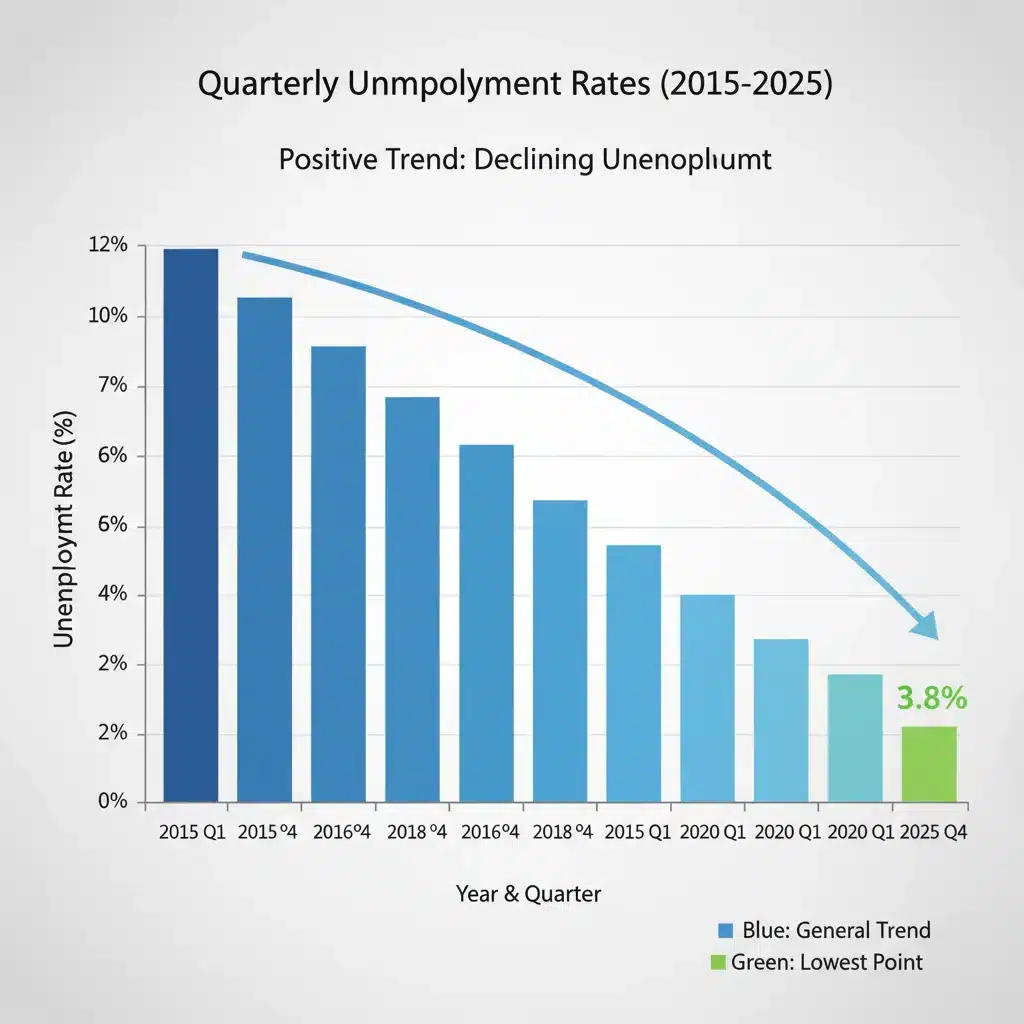
The economic landscape is buzzing with optimism as recent data reveals a significant milestone: the unemployment rate hit a 10-year low of 3.8% in Q4 2025. This remarkable achievement signals a robust and resilient economy, providing a strong foundation for the upcoming year. For both job seekers and employers, understanding the implications of this historically low unemployment rate low is crucial. This comprehensive article delves into the factors contributing to this decline, analyzes its impact across various sectors, and offers a forward-looking perspective on what the 2026 job market holds.
A 3.8% unemployment rate is more than just a statistic; it reflects a dynamic labor market where opportunities are abundant, and businesses are thriving. This figure, last seen a decade ago, suggests that economic policies, technological advancements, and shifting global dynamics have converged to create an environment conducive to job creation and sustained growth. As we unpack these recent updates, we will explore how this positive trend could reshape career paths, influence wage growth, and drive innovation in the year ahead.
Understanding the Phenomenon: Why the Unemployment Rate is So Low
The journey to a 3.8% unemployment rate low in Q4 2025 has been multifaceted, driven by a combination of strategic economic maneuvers, technological integration, and a resilient workforce. Several key factors have played pivotal roles in this impressive decline:
Strong Economic Growth and Business Expansion
Consistent GDP growth throughout 2024 and 2025 has fueled business expansion across almost all sectors. Companies, bolstered by consumer confidence and increased demand, have invested heavily in new projects and capacity building, naturally leading to higher hiring rates. This expansion isn’t just limited to large corporations; small and medium-sized enterprises (SMEs) have also shown remarkable growth, contributing significantly to job creation.
Technological Advancements and Digital Transformation
While often feared for job displacement, technological advancements, particularly in areas like AI, automation, and data analytics, have paradoxically created new job categories and increased efficiency, freeing up human capital for more strategic roles. The digital transformation accelerated by recent global events has led to a surge in demand for tech-skilled professionals, from software developers to cybersecurity experts, driving down the unemployment rate low in these specialized fields.
Effective Fiscal and Monetary Policies
Government fiscal policies, including targeted investments in infrastructure and green energy, coupled with accommodative monetary policies from central banks, have provided a stable and supportive environment for economic activity. These policies have encouraged investment, reduced borrowing costs for businesses, and stimulated consumer spending, all of which are critical for job growth.
Adaptable Workforce and Reskilling Initiatives
The workforce has shown remarkable adaptability. A growing emphasis on reskilling and upskilling programs, both privately and publicly funded, has equipped workers with the necessary skills for emerging industries. This proactive approach to talent development has minimized skill gaps and allowed individuals to transition into new roles, further contributing to the declining unemployment rate low.
Demographic Shifts and Labor Force Participation
While often a slower-moving factor, demographic shifts, including changes in retirement patterns and increased participation from certain demographic groups, have also played a role. A healthy balance between those entering and exiting the workforce, coupled with a strong desire for employment, helps maintain a robust labor supply to meet employer demand.
Sector-Specific Impacts of the Low Unemployment Rate
The impact of a 3.8% unemployment rate low is not uniformly distributed across all sectors. While most industries are experiencing positive effects, some are feeling the pinch of a tight labor market more acutely than others. Understanding these sector-specific dynamics is vital for both job seekers planning their careers and businesses strategizing their hiring processes for 2026.
Technology and IT: Continued Boom
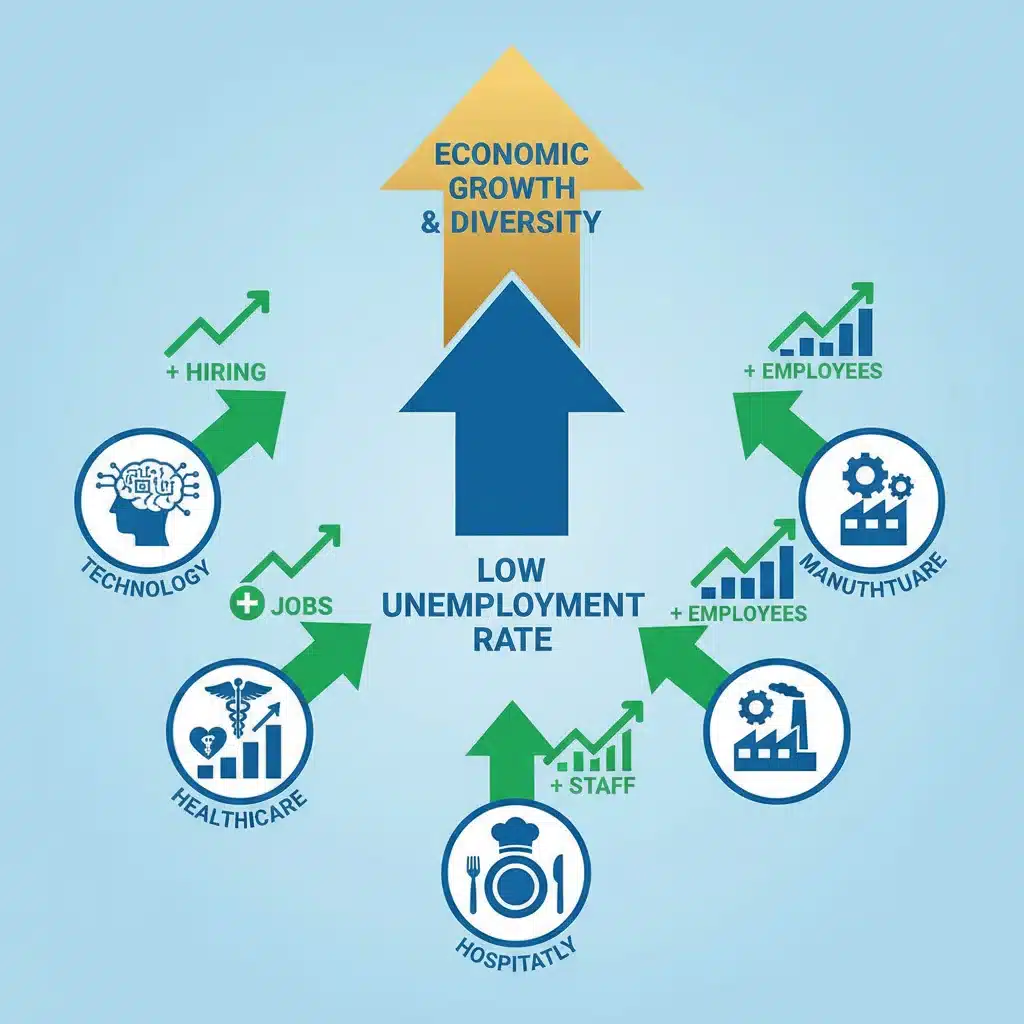
The technology sector continues to be a powerhouse, consistently driving down the unemployment rate low. Demand for software engineers, data scientists, AI specialists, cloud architects, and cybersecurity professionals remains exceptionally high. Companies in this sector are offering competitive salaries, attractive benefits, and flexible working arrangements to secure top talent. This trend is expected to continue well into 2026, with innovation driving new sub-sectors and job roles.
Healthcare: Persistent Demand
Healthcare is another sector with an enduring high demand for professionals, from doctors and nurses to allied health workers and medical researchers. An aging population, coupled with advancements in medical technology and an increased focus on public health, ensures that the unemployment rate low in this field will likely persist. Healthcare providers are actively recruiting, often offering sign-on bonuses and relocation packages.
Manufacturing and Logistics: Resurgence and Modernization
Contrary to previous decades, manufacturing has seen a resurgence, driven by reshoring initiatives and technological modernization (Industry 4.0). Skilled tradespeople, engineers, and supply chain specialists are in high demand. Automation is creating new roles for technicians who can manage and maintain advanced machinery, contributing to the overall unemployment rate low for skilled labor. The logistics sector also remains critical, with e-commerce continuing to expand, requiring more warehouse workers, drivers, and logistics coordinators.
Hospitality and Retail: Recovering and Adapting
After significant challenges, the hospitality and retail sectors have shown strong recovery. While still facing some labor shortages, particularly for entry-level positions, increased consumer spending and tourism have spurred hiring. Businesses are adapting by offering better wages, flexible schedules, and career development opportunities to attract and retain staff, helping to reduce the unemployment rate low in these service-oriented industries.
Education: Evolving Needs
The education sector is experiencing evolving demands, particularly for educators skilled in STEM subjects, special education, and digital learning. Universities and vocational schools are also seeing increased enrollment, requiring more faculty and administrative staff. The push for lifelong learning and professional development also creates opportunities for instructors and course developers, further impacting the unemployment rate low positively.
Implications for the 2026 Job Market: A Forward Look
With the unemployment rate low at 3.8% in Q4 2025, the stage is set for a dynamic and competitive 2026 job market. This low rate brings both opportunities and challenges for job seekers, employers, and policymakers alike.
For Job Seekers: Empowered and Selective
A low unemployment rate empowers job seekers. With more job openings than available candidates in many sectors, individuals have greater leverage in salary negotiations, benefits packages, and work-life balance considerations. This environment encourages job mobility, allowing professionals to seek roles that align better with their career aspirations and personal values. Expect continued demand for specialized skills, making continuous learning and upskilling critical for career advancement.
For Employers: Intense Competition for Talent
For employers, a historically low unemployment rate low means an increasingly tight labor market. Attracting and retaining top talent will be a significant challenge. Companies will need to innovate their recruitment strategies, offering not just competitive compensation but also attractive company culture, professional development opportunities, and flexible work arrangements. Employee retention strategies, such as robust benefits, career pathing, and recognition programs, will become even more crucial to prevent high turnover. Businesses that fail to adapt to these new realities risk falling behind in the race for talent.
Wage Growth and Inflationary Pressures
A tight labor market typically leads to upward pressure on wages as companies compete for workers. While beneficial for employees, significant wage growth could contribute to inflationary pressures if not managed carefully by monetary authorities. The balance between maintaining a healthy unemployment rate low and controlling inflation will be a key economic challenge for 2026.
Focus on Automation and Efficiency
In response to labor shortages and rising wage costs, businesses are likely to accelerate their adoption of automation and efficiency-enhancing technologies. This doesn’t necessarily mean job displacement across the board but rather a shift in job responsibilities, requiring workers to collaborate with technology and manage automated processes. This trend will create new demands for a workforce capable of leveraging these tools effectively.
Remote and Hybrid Work Models
The prevalence of remote and hybrid work models, which gained traction during the pandemic, is likely to continue and even expand as employers seek to broaden their talent pools beyond geographical constraints. This flexibility can be a powerful tool for attracting talent in a market characterized by a low unemployment rate low, offering employees greater autonomy and work-life integration.
Challenges and Potential Headwinds for 2026
While the current unemployment rate low paints an optimistic picture, it’s important to acknowledge potential challenges and headwinds that could influence the 2026 job market. Economic forecasting is inherently complex, and several factors could introduce volatility.
Global Economic Instability
Geopolitical tensions, supply chain disruptions, and economic slowdowns in major global economies could impact domestic growth and, consequently, the job market. A significant downturn in international trade or investment could dampen business confidence and hiring plans, even with a strong domestic unemployment rate low.
Inflationary Pressures and Interest Rate Hikes
Persistent inflation could force central banks to implement further interest rate hikes, potentially slowing economic activity and increasing borrowing costs for businesses. While necessary to control prices, aggressive monetary tightening could cool down the job market from its current low unemployment rate low.
Skill Gaps and Talent Shortages
Despite the overall low unemployment, significant skill gaps persist in certain high-demand areas. If these gaps are not adequately addressed through education and training initiatives, businesses may struggle to find qualified candidates, potentially hindering growth and innovation. This could lead to a paradox where the unemployment rate low coexists with unfilled critical positions.
Technological Disruption and Job Evolution
The rapid pace of technological change, particularly in AI, could lead to unforeseen job displacement in some sectors while creating new opportunities in others. Managing this transition and ensuring the workforce is adequately prepared for evolving roles will be a continuous challenge. While currently contributing to a low unemployment rate low by creating new jobs, the long-term impact needs careful monitoring.
Strategies for Navigating the 2026 Job Market
Both job seekers and employers must adopt proactive strategies to thrive in a market defined by a historically low unemployment rate low.
For Job Seekers: Sharpen Your Edge
- Continuous Learning and Upskilling: Invest in acquiring new skills, especially in digital literacy, data analytics, AI, and specialized technical fields. Online courses, certifications, and vocational training can significantly enhance employability.
- Networking: Leverage professional networks, attend industry events, and engage with mentors. A strong network can provide insights into hidden job opportunities and industry trends.
- Highlight Soft Skills: In a highly skilled market, soft skills like critical thinking, problem-solving, adaptability, communication, and emotional intelligence are highly valued. Emphasize these in your applications and interviews.
- Be Flexible: Consider remote or hybrid roles, and be open to opportunities in emerging industries or roles that may require a slight pivot from your traditional career path.
For Employers: Innovate and Adapt
- Re-evaluate Compensation and Benefits: To attract and retain talent in a low unemployment rate low environment, regularly review and update salary structures, health benefits, retirement plans, and other perks to ensure competitiveness.
- Invest in Employee Development: Offer robust training and development programs to upskill current employees, reducing reliance on external hiring and fostering loyalty.
- Cultivate a Positive Company Culture: A supportive, inclusive, and engaging work environment is a powerful magnet for talent. Prioritize employee well-being, recognition, and opportunities for growth.
- Embrace Flexibility: Offer remote, hybrid, and flexible work schedules where feasible. This broadens your talent pool and enhances employee satisfaction.
- Streamline Hiring Processes: Make your recruitment process efficient, transparent, and candidate-friendly. A lengthy or cumbersome process can deter top talent in a competitive market.
- Leverage Technology in HR: Use AI-powered tools for recruitment, onboarding, and talent management to improve efficiency and candidate experience.
The Role of Government and Policy in Sustaining the Low Unemployment Rate
The continued maintenance of a low unemployment rate low is not solely dependent on market forces; government policies play a crucial role in shaping the economic environment. For 2026 and beyond, policymakers will need to focus on several key areas:
Investing in Education and Workforce Development
To address skill gaps and prepare the workforce for future jobs, sustained investment in education, vocational training, and reskilling programs is essential. This includes partnerships between educational institutions and industries to ensure curricula are aligned with market needs, thereby sustaining the low unemployment rate low.
Promoting Innovation and Entrepreneurship
Policies that support innovation, research and development, and the growth of startups can create new industries and job opportunities. Tax incentives, access to capital, and reduced regulatory burdens can foster a dynamic entrepreneurial ecosystem.
Maintaining Fiscal and Monetary Stability
Prudent fiscal management and independent monetary policy are critical for creating a stable economic environment. Balancing growth with inflation control will be key to preventing economic shocks that could reverse the progress made in achieving a low unemployment rate low.
Infrastructure Development
Continued investment in infrastructure—digital, physical, and green—not only creates jobs directly but also improves productivity and competitiveness across the economy, indirectly supporting job growth and helping to maintain a low unemployment rate low.
Conclusion: A Promising Outlook with Strategic Considerations
The unemployment rate hit a 10-year low of 3.8% in Q4 2025, marking a significant achievement and setting a highly optimistic tone for the 2026 job market. This historically low unemployment rate low reflects a robust economy, technological innovation, and an adaptable workforce. For job seekers, it signifies a market rich with opportunities, demanding continuous skill development and strategic career planning. For employers, it underscores the critical need for innovative recruitment, competitive compensation, and a compelling company culture to attract and retain talent.
While the outlook is overwhelmingly positive, vigilance against potential economic headwinds, such as global instability and inflationary pressures, is necessary. Proactive strategies from individuals, businesses, and policymakers will be instrumental in navigating these challenges and sustaining the current economic momentum. The 2026 job market is poised for continued growth and evolution, offering exciting prospects for those prepared to embrace its dynamic nature. The ongoing narrative of a low unemployment rate low is a testament to resilience and strategic foresight, promising a bright future for the labor landscape.