
Expert Insights: How New Trade Agreements Expected in 2026 Will Reshape U.S. Supply Chains and Consumer Prices by 5-10% (INSIDER KNOWLEDGE)
The global economic landscape is a constantly shifting tapestry, intricately woven with threads of diplomacy, commerce, and national interest. As we look towards 2026, the anticipation of new U.S. trade agreements looms large, promising to be a significant catalyst for change. These agreements, still in their formative stages, are not mere bureaucratic formalities; they are foundational shifts that will ripple through every facet of the American economy, profoundly impacting supply chains and, consequently, the prices consumers pay for goods and services. Our expert analysis suggests that these changes could lead to a 5-10% fluctuation in consumer prices, a figure that demands the attention of businesses, policymakers, and the everyday American household.
Understanding the intricacies of these forthcoming changes requires more than just a cursory glance at headlines. It necessitates a deep dive into the geopolitical motivations, economic theories, and logistical challenges that underpin international commerce. The United States, as a global economic powerhouse, is perpetually engaged in a delicate balancing act – fostering economic growth, ensuring national security, and promoting fair trade practices. The new wave of US Trade Agreements 2026 is expected to reflect these multifaceted objectives, potentially ushering in an era of restructured global commerce.
The Geopolitical Chessboard: Driving Forces Behind New US Trade Agreements 2026
The impetus for new trade agreements is rarely purely economic. Geopolitical considerations often play a dominant role, shaping the alliances and rivalries that define international relations. In the current global climate, several key factors are driving the U.S. towards re-evaluating and renegotiating its trade pacts. The increasing focus on supply chain resilience, particularly in the wake of recent global disruptions like the pandemic and geopolitical conflicts, is paramount. Nations are increasingly wary of over-reliance on single-source suppliers, especially for critical goods and technologies.
Furthermore, the ongoing competition with economic rivals, particularly in sectors deemed strategic, is a significant motivator. Trade agreements can be powerful tools to strengthen alliances, counter adversarial economic influence, and protect intellectual property. The desire to establish new norms for digital trade, environmental standards, and labor practices also features prominently in the U.S. agenda for the US Trade Agreements 2026. These are not merely about tariffs and quotas; they are about setting the rules of engagement for the 21st century global economy.
Another crucial element is the domestic political landscape. Trade policy is often a contentious issue, with various stakeholders advocating for their interests. Labor unions, environmental groups, specific industries, and consumer advocates all exert pressure on policymakers. The agreements expected in 2026 will undoubtedly reflect a careful calibration of these domestic demands with broader international objectives. The push for ‘fair trade’ and the protection of American jobs are recurring themes that often influence the negotiating positions of U.S. administrations.
The shift towards more regionalized trade blocs and bilateral agreements, moving away from large multilateral pacts, is also a notable trend. This allows for more tailored agreements that address specific concerns and leverage particular strengths between two or a few nations. This strategic pivot could mean a more fragmented but potentially more resilient global trade architecture. The implications of these geopolitical undercurrents are profound, setting the stage for significant alterations to existing supply chains and the eventual cost of goods.
Anticipated Shifts in U.S. Supply Chains: Reshoring, Nearshoring, and Diversification
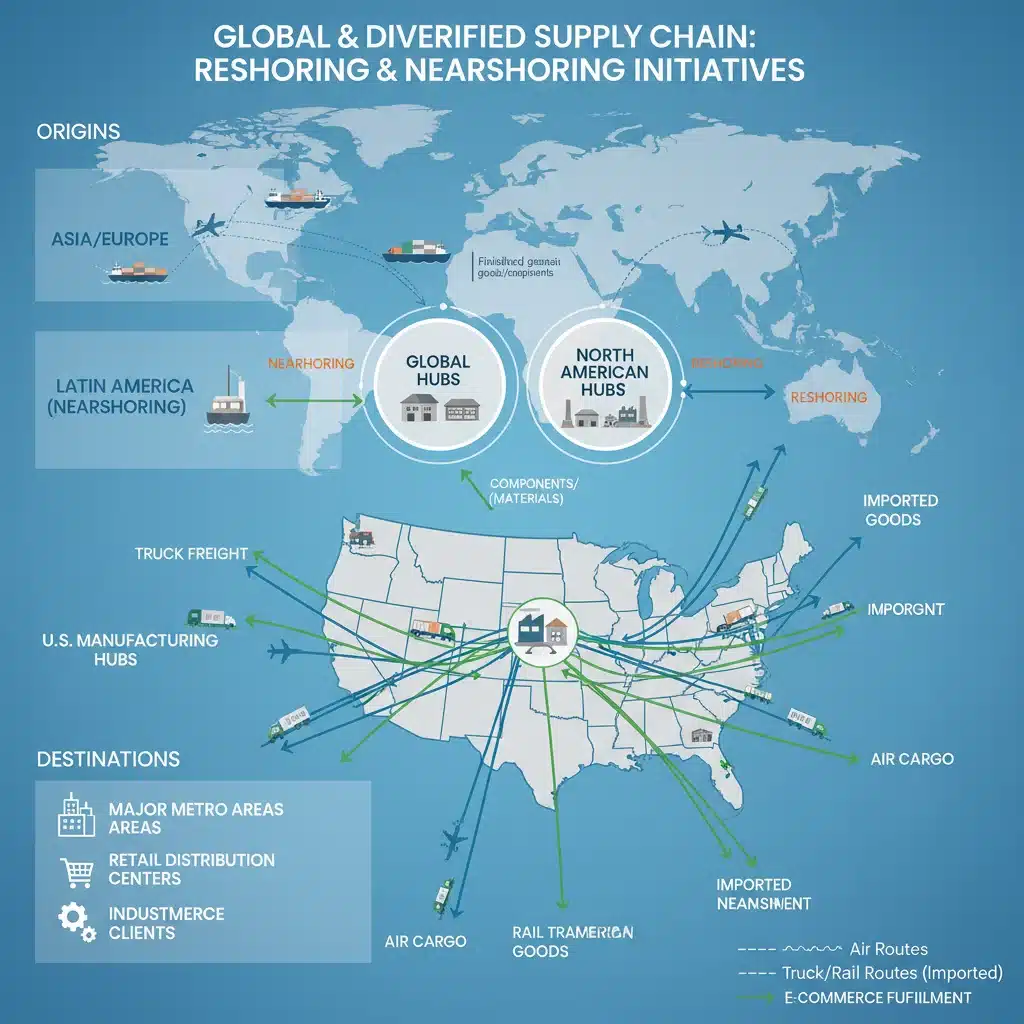
One of the most immediate and tangible impacts of new US Trade Agreements 2026 will be a significant restructuring of global supply chains. For decades, companies prioritized efficiency and cost-cutting, often leading to highly centralized and geographically distant manufacturing hubs. The vulnerabilities exposed by recent crises have prompted a strategic rethink, with an increased emphasis on resilience and security.
The Rise of Reshoring and Nearshoring
Expect a continued and accelerated trend towards reshoring and nearshoring. Reshoring involves bringing manufacturing and production back to the United States, while nearshoring entails relocating it to neighboring countries, such as Mexico or Canada. These strategies aim to reduce transit times, mitigate geopolitical risks, and improve oversight of labor and environmental standards. New trade agreements can incentivize these moves through favorable tariff structures, tax breaks, or regulatory alignment.
For instance, agreements that reduce trade barriers with North American partners could further solidify the continent as a manufacturing hub, making nearshoring an even more attractive option. Conversely, agreements that impose higher tariffs or stricter import quotas on goods from certain distant regions could make reshoring a more economically viable choice for U.S. companies. This shift isn’t just about where products are made; it’s about building more robust, responsive, and secure supply networks.
Diversification of Sourcing
Beyond reshoring and nearshoring, companies will likely pursue greater diversification of their sourcing strategies. Instead of relying on one or two primary suppliers for critical components, businesses will seek to establish relationships with multiple suppliers across different geographies. This ‘China+1’ or ‘multi-country’ approach aims to reduce the risk of disruption from any single point of failure, whether it be a natural disaster, a geopolitical event, or a localized economic downturn.
The US Trade Agreements 2026 could facilitate this diversification by opening up new markets or strengthening trade ties with emerging economies that offer alternative manufacturing capabilities. This would require significant investment in new infrastructure, logistics, and technological integration, but the long-term benefits in terms of supply chain stability are expected to outweigh the initial costs.
Technological Integration and Automation
The restructuring of supply chains will also be heavily intertwined with advancements in technology. Automation, artificial intelligence, and the Internet of Things (IoT) will play increasingly critical roles in managing complex, diversified networks. From predictive analytics for demand forecasting to autonomous vehicles for last-mile delivery, technology will be essential for optimizing efficiency and visibility across these evolving supply chains. New trade agreements might even include provisions that encourage technological collaboration and data sharing between partner nations, further streamlining cross-border logistics.
The combined effect of these shifts – reshoring, nearshoring, diversification, and technological integration – will be a profound transformation of how goods reach American consumers. While these changes promise greater resilience, they also come with a potential for increased costs, which brings us to the next crucial aspect of our analysis: consumer prices.
The 5-10% Price Impact: How New Agreements Could Influence Consumer Spending
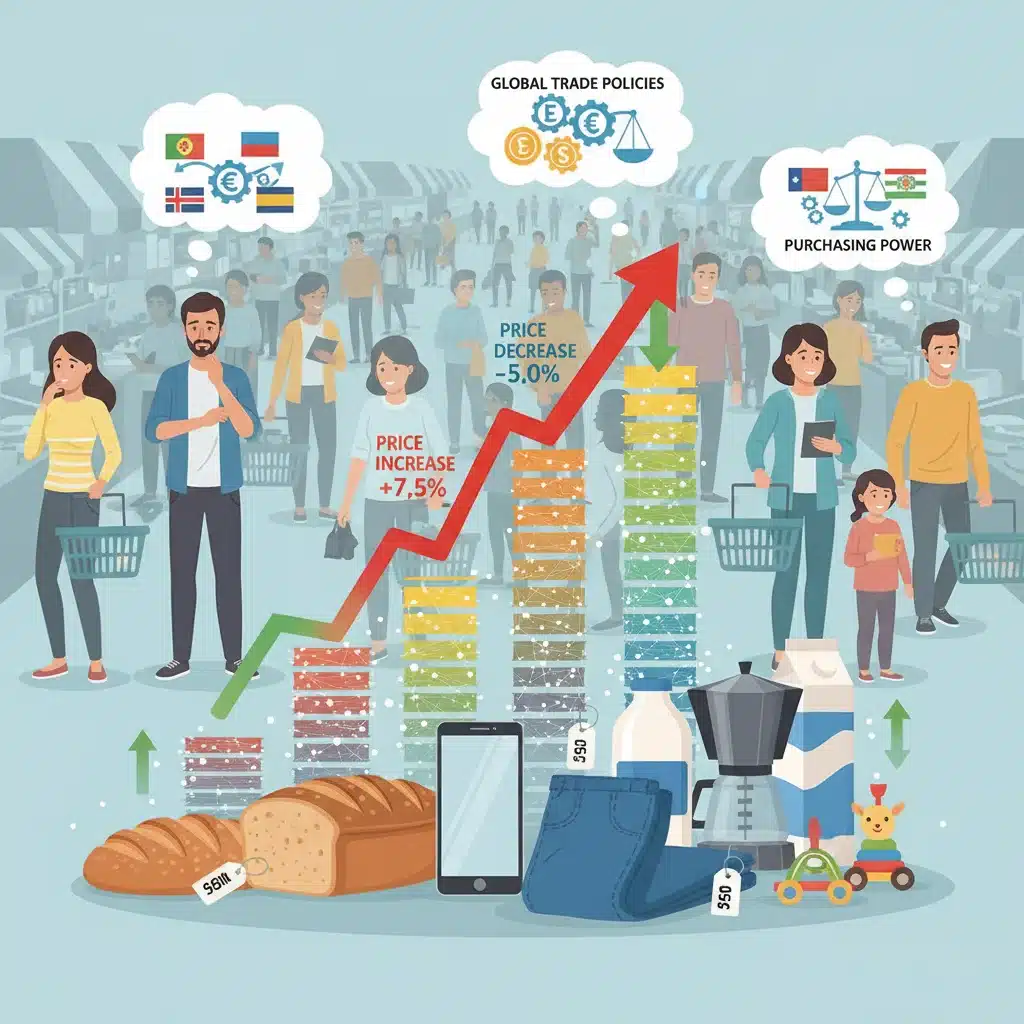
The most direct and noticeable consequence for the average American will be the impact on consumer prices. Our expert assessment indicates a potential fluctuation of 5-10% in the cost of goods, a range that could significantly affect household budgets and overall economic stability. This estimate is derived from several factors stemming from the anticipated US Trade Agreements 2026.
Increased Production Costs
Reshoring and nearshoring, while beneficial for supply chain resilience, often come with higher production costs. Labor in the U.S. and neighboring countries is generally more expensive than in traditional offshore manufacturing hubs. Additionally, compliance with stricter environmental regulations and higher safety standards can add to the manufacturing outlay. These increased costs are almost invariably passed on to the consumer in the form of higher retail prices.
Consider the example of electronics or apparel. If components or finished products previously manufactured in low-cost regions are now produced closer to home, the higher wages and operational expenses will translate to a more expensive final product. A 5-10% increase could mean hundreds of dollars more annually for an average household’s discretionary spending.
Tariffs and Trade Barriers
While new agreements might reduce tariffs with some partners, they could simultaneously introduce or increase tariffs with others, particularly those deemed to be engaging in unfair trade practices or those with whom the U.S. seeks to reduce economic reliance. Tariffs are essentially taxes on imported goods, and these costs are almost always borne by the importer, who then passes them on to wholesalers, retailers, and ultimately, consumers. Even a seemingly small tariff can have a cascading effect across a product’s value chain.
The specific sectors targeted by these tariffs will experience the most direct impact. For example, if tariffs are imposed on steel or aluminum from certain countries, industries reliant on these materials (e.g., automotive, construction, appliance manufacturing) will see their input costs rise, leading to higher prices for cars, homes, and refrigerators.
Logistical and Transportation Expenses
While nearshoring can reduce long-haul ocean freight costs, the overall restructuring of supply chains might introduce new logistical complexities and expenses. Establishing new transportation routes, building new warehousing facilities, and adapting to different regulatory environments can all contribute to increased operational costs. Moreover, the demand for diversified sourcing might lead to less efficient bulk shipping in some instances, pushing up per-unit transportation costs.
For perishable goods or items with high transportation sensitivity, these logistical changes could have a more pronounced effect on final prices. The efficiency gains that were once prioritized may be sacrificed for resilience, leading to a slight uptick in overall supply chain expenditures.
Currency Fluctuations and Exchange Rates
Trade agreements can also influence currency exchange rates. Stronger trade ties with certain nations might lead to a strengthening of their currencies against the U.S. dollar, making their exports to the U.S. more expensive. Conversely, a weaker dollar could make imports more costly across the board. While not directly a result of tariffs, currency fluctuations are an integral part of international trade and can significantly impact the final price of imported goods.
The 5-10% range is an aggregate estimate, and the actual impact will vary significantly by sector and product category. Some goods might see marginal price increases, while others, particularly those heavily reliant on specific international supply chains, could experience more substantial hikes or even decreases if new agreements unlock highly efficient, lower-cost alternatives.
Sector-Specific Impacts: Winners and Losers in the New Trade Landscape
The broad strokes of the US Trade Agreements 2026 will undoubtedly paint a new picture for various sectors of the U.S. economy. While some industries are poised to benefit significantly, others may face increased challenges and require substantial adaptation.
Manufacturing and Industrial Sectors
Industries involved in advanced manufacturing, particularly those critical for national security (e.g., semiconductors, pharmaceuticals, defense), are likely to be major beneficiaries. Government incentives and trade policies aimed at reshoring these capabilities will spur domestic investment, job creation, and technological advancement. This could lead to a revitalization of certain industrial regions in the U.S., but also potentially higher production costs for end products.
Conversely, industries heavily reliant on low-cost imported components, such as certain consumer electronics or textile manufacturers, might face increased pressure. They would need to either absorb higher input costs, pass them on to consumers, or find new, more expensive domestic or nearshore suppliers.
Agriculture and Food Production
Agriculture is consistently a key component of U.S. trade negotiations. New agreements could open up new export markets for American agricultural products, benefiting farmers and agribusinesses. However, they could also lead to increased competition from imported food products if tariffs are lowered on certain items, potentially impacting domestic producers. The balance between protecting domestic agriculture and expanding export opportunities will be a delicate one.
Technology and Digital Services
The digital economy is a growing focus for trade policy. Agreements are likely to include provisions on data localization, cross-border data flows, intellectual property protection, and digital taxation. U.S. tech companies could benefit from standardized rules that facilitate global operations, but they might also face new regulatory hurdles in certain markets. The impact on consumer prices here might be less direct, potentially manifesting as changes in service costs or the availability of certain digital products.
Retail and Consumer Goods
Retailers will be on the front lines of managing the changes in supply chains and consumer prices. They will need to adapt their procurement strategies, manage inventory more dynamically, and potentially adjust pricing models. Consumers will experience these changes directly at the point of purchase, with a possible shift in brand availability and product variety, in addition to price fluctuations.
Preparing for the Future: Strategies for Businesses and Consumers
Given the anticipated shifts from the US Trade Agreements 2026, both businesses and consumers must proactively prepare to navigate the evolving economic landscape.
For Businesses:
- Supply Chain Mapping and Diversification: Conduct a thorough audit of your current supply chain to identify vulnerabilities and single points of failure. Explore alternative sourcing options, including reshoring and nearshoring, and establish relationships with multiple suppliers.
- Scenario Planning: Develop contingency plans for various trade policy outcomes. Model the impact of different tariff structures, logistical changes, and labor costs on your profitability and pricing strategies.
- Technological Investment: Invest in automation, AI, and data analytics to enhance supply chain visibility, efficiency, and resilience. This will be crucial for managing more complex networks.
- Engage with Policy Makers: Stay informed about ongoing trade negotiations and advocate for policies that support your industry’s interests.
- Focus on Value: As prices potentially rise, emphasize the value proposition of your products – quality, reliability, and sustainability – to justify higher costs to consumers.
For Consumers:
- Budget Adjustment: Be prepared for potential price increases across various categories of goods. Review your household budget and identify areas where you might need to adjust spending.
- Research and Compare: Pay closer attention to product origins and compare prices across different brands and retailers. The shifts in supply chains might lead to new entrants or changes in competitive dynamics.
- Prioritize Needs vs. Wants: In an environment of potential price hikes, a clear understanding of essential purchases versus discretionary spending will become even more important.
- Support Local: Consider supporting local businesses and domestically produced goods, which might become more competitive or insulated from international trade fluctuations.
- Stay Informed: Keep abreast of economic news and trade policy developments to understand how they might affect your purchasing power.
Conclusion: Navigating the New Era of Global Trade
The new US Trade Agreements 2026 are set to usher in a transformative period for the American economy. While the exact contours of these agreements are still taking shape, the underlying trends point towards a fundamental re-evaluation of global supply chains and a potential 5-10% shift in consumer prices. This isn’t merely an academic exercise; it’s a critical forecast that will impact boardrooms and kitchen tables alike.
The move towards greater supply chain resilience, driven by geopolitical imperatives and lessons learned from recent disruptions, is a necessary evolution. However, this resilience often comes at a cost, which will likely be reflected in the price tags of everyday goods. By understanding the driving forces behind these changes, anticipating their impacts, and strategically preparing, businesses can adapt and thrive, while consumers can make informed decisions to navigate the evolving economic landscape.
The future of trade is not static; it is a dynamic interplay of policy, economics, and human ingenuity. The period leading up to and following the implementation of the US Trade Agreements 2026 will be a testament to our collective ability to adapt, innovate, and build a more secure and prosperous economic future.