2026 FAFSA Changes: Maximize Student Aid by $2,000

Understanding the 2026 FAFSA Changes: Maximizing Your Student Aid by up to $2,000
Navigating the complex world of financial aid can be daunting, but understanding the upcoming 2026 FAFSA changes is crucial for any student or family seeking to fund higher education. The Free Application for Federal Student Aid (FAFSA) is undergoing significant transformations, and these updates could profoundly impact the amount of financial assistance you receive. Our comprehensive guide will break down these critical adjustments, helping you strategize and potentially increase your student aid package by up to $2,000 or more. Staying informed about the 2026 FAFSA changes is not just about compliance; it’s about optimizing your financial future.
The federal government continuously refines the FAFSA process to make it more accessible and equitable. However, with these improvements come new rules, calculations, and submission requirements. For the 2026-2027 academic year, applicants will encounter changes that affect everything from how family income is assessed to the terminology used. Missing out on these details could mean leaving significant financial aid on the table. This article aims to be your definitive resource, equipping you with the knowledge to confidently approach the new FAFSA and secure the maximum possible aid.
The Evolution of FAFSA: Why 2026 Matters
The FAFSA has been a cornerstone of federal student aid for decades, but its evolution reflects a commitment to simplifying the application process and expanding access to higher education. The 2026 FAFSA changes are a continuation of the FAFSA Simplification Act, which began implementation in previous cycles. These ongoing reforms are designed to streamline the application, reduce complexity, and provide a more accurate assessment of a family’s ability to pay for college.
For many years, the FAFSA was criticized for its length and complexity, often deterring eligible students from applying. The move towards a more user-friendly interface and clearer guidelines is a welcome development. However, ‘simpler’ doesn’t always mean ‘easier’ without proper understanding. New terminology, revised aid formulas, and altered submission processes mean that even experienced FAFSA filers will need to pay close attention to the 2026 FAFSA changes. The goal is to ensure that more students, particularly those from underserved backgrounds, can access federal grants, scholarships, work-study programs, and low-interest loans.
The impact of these changes extends beyond just the federal level. Many states and individual colleges use FAFSA data to determine eligibility for their own financial aid programs. Therefore, a thorough understanding of the 2026 FAFSA changes is not just about federal aid; it’s about unlocking a wider array of financial opportunities. By preparing adequately, you can position yourself to receive a more substantial financial aid package, potentially reducing your overall college costs significantly.
Key 2026 FAFSA Changes You Need to Know
Let’s dive into the specifics of the most impactful 2026 FAFSA changes. These modifications will directly influence how your financial need is calculated and, consequently, the amount of aid you might receive.
1. Introduction of the Student Aid Index (SAI)
One of the most significant 2026 FAFSA changes is the replacement of the Expected Family Contribution (EFC) with the Student Aid Index (SAI). While both terms represent an eligibility index number used to determine aid, the SAI calculation is fundamentally different. The EFC could not be less than zero, but the SAI can be a negative number, down to -1,500. This change is particularly beneficial for students with the greatest financial need, potentially increasing their eligibility for Pell Grants and other need-based aid.
The SAI calculation places a greater emphasis on a student’s and their family’s income, while deemphasizing assets to some extent. It also simplifies the treatment of family businesses and farms, which previously complicated the EFC calculation. Understanding how your family’s financial situation translates into an SAI is critical for anticipating your aid eligibility. The lower your SAI, the more financial aid you are likely to receive.
2. Streamlined Application Process and Data Retrieval
The FAFSA form itself has been significantly shortened and simplified. The number of questions has been reduced, making the application less intimidating and quicker to complete. A major enhancement among the 2026 FAFSA changes is the expanded use of direct data exchange with the IRS. This means more applicants will have their tax information automatically transferred from the IRS, reducing manual entry errors and making the process smoother.
However, all contributors (students, parents, spouses) whose financial information is required on the FAFSA must provide consent for the IRS data retrieval. Without this consent, the application cannot be processed, and the student will not be eligible for federal student aid. This new consent requirement is a crucial step that applicants must not overlook. Ensuring all necessary parties provide consent promptly will prevent delays in your aid application.
3. Changes to Parental Contribution and Household Size
The method for determining parental contribution has also been revised. One notable change under the 2026 FAFSA changes is the elimination of the ‘number in college’ factor in the aid calculation. Previously, having multiple children in college simultaneously would significantly reduce a family’s EFC. With the SAI, this factor is no longer directly used in the formula, which could mean a higher SAI for families with multiple college students. However, some institutions may still consider this factor when awarding their own aid.
Additionally, the definition of household size has been clarified and aligns more closely with tax filing status. This aims to provide a more consistent and accurate picture of a family’s financial responsibilities. Understanding these nuances will be key to accurately reporting your family’s information and ensuring your aid eligibility is correctly assessed.
4. Expanded Pell Grant Eligibility
Perhaps one of the most exciting 2026 FAFSA changes for many students is the expansion of Pell Grant eligibility. More students from low-income backgrounds will be eligible for Pell Grants, and some may receive a larger award. The new SAI calculation, particularly its ability to be negative, directly contributes to this expansion. Students with an SAI of -1,500 will automatically qualify for the maximum Pell Grant award.
Furthermore, Pell Grant eligibility will now be linked to the federal poverty level and inflation, ensuring that the grant remains a powerful tool for financial access over time. This means that even if your SAI isn’t negative, you might still qualify for a Pell Grant if your family income falls within certain thresholds relative to the poverty line. This expansion is designed to make higher education more attainable for a broader range of students.

Strategies to Maximize Your Student Aid by up to $2,000
With the 2026 FAFSA changes in play, strategic planning is more important than ever. Here’s how you can position yourself to maximize your student aid, potentially increasing your package by up to $2,000 or more.
1. Understand Your SAI and Its Implications
The first step is to familiarize yourself with how the Student Aid Index (SAI) is calculated. While the official FAFSA form will do the heavy lifting, understanding the components that contribute to your SAI – primarily income and assets – allows you to make informed decisions. If possible, consider strategies that might reduce your reported income or assets in the base year used for the FAFSA (typically two years prior to the academic year). For example, if you are a dependent student, understanding how your parents’ income and assets are weighed can inform family financial planning. For independent students, your own income and assets are the primary factors.
2. Complete the FAFSA Early and Accurately
This advice remains timeless, but it’s even more crucial with the 2026 FAFSA changes. Many financial aid programs, especially those administered by states and individual colleges, operate on a first-come, first-served basis. Submitting your FAFSA as soon as it opens (typically October 1st for the following academic year) gives you the best chance of receiving maximum aid. Accuracy is equally important; errors can lead to delays or even a reduction in aid. Double-check all financial figures, Social Security numbers, and demographic information before submission.
3. Provide Consent for IRS Data Retrieval
As mentioned, the new consent requirement for IRS data retrieval is non-negotiable. Ensure that every required contributor (student, parents, spouse) provides consent for the IRS to share their tax information. Without this, your FAFSA will be incomplete, and you won’t be eligible for federal aid. This is a simple yet critical step that can easily be overlooked, so make it a priority when filling out the form.
4. Be Aware of Asset Reporting Changes
While the new SAI calculation generally de-emphasizes assets compared to the old EFC, certain assets still count. For dependent students, parent assets (excluding retirement accounts and the value of the primary home) are reported. For independent students, your own assets are reported. If you have significant cash savings, investments, or other non-retirement assets, consider how these might impact your SAI. Strategic timing of large purchases or transfers (e.g., using savings for educational expenses) before the FAFSA base year could potentially lower your reported assets.
5. Understand the Impact on Multiple Children in College
The elimination of the ‘number in college’ factor from the federal aid formula is a significant change. If you are a family with multiple children attending college simultaneously, be prepared for your SAI to potentially be higher than your EFC would have been in previous years. However, don’t despair. Many colleges and universities use their own institutional aid formulas and may still consider the number of children in college when awarding their grants and scholarships. It’s vital to communicate this situation directly with the financial aid offices of the schools your children are applying to.
6. Appeal Your Financial Aid Offer If Needed
Even with the 2026 FAFSA changes, unforeseen financial circumstances can arise that are not accurately reflected on your FAFSA. If your family has experienced a job loss, significant medical expenses, or other substantial changes in income or assets since the tax year used for your FAFSA, you have the right to appeal your financial aid offer. This process, known as ‘professional judgment,’ allows financial aid officers to adjust your aid package based on your current financial situation. Always be prepared to provide documentation to support your appeal.
7. Seek Professional Guidance
The complexity of financial aid, even with simplification efforts, can be overwhelming. If you’re unsure about any aspect of the 2026 FAFSA changes or how to best position yourself, consider seeking advice from a financial aid advisor or a college planning expert. These professionals can provide personalized guidance, help you navigate the new forms, and identify strategies specific to your family’s situation to maximize your aid.
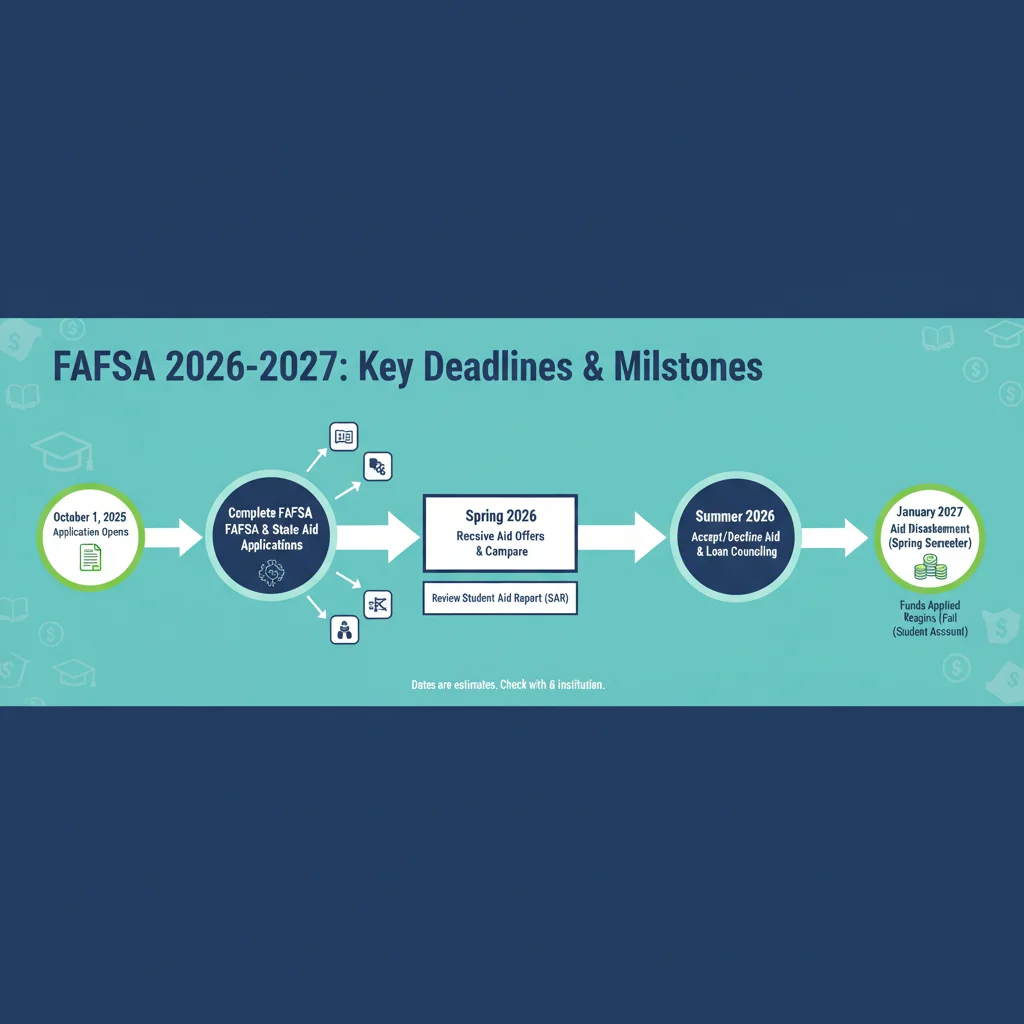
Preparing for the 2026 FAFSA: A Checklist
To ensure you’re fully prepared for the 2026 FAFSA changes, follow this checklist:
- Create an FSA ID: Both the student and one parent (if dependent) will need an FSA ID. Ensure these are created well in advance of the application opening.
- Gather Necessary Documents: Although IRS data retrieval is expanded, have your tax returns (from the base year, typically two years prior to the academic year), W-2s, and records of other income ready. Also, gather information on assets (savings, checking, investments, real estate other than primary home) if applicable.
- Understand the Base Year: Remember the FAFSA uses financial information from two years prior. For the 2026-2027 FAFSA, this typically means your 2024 tax information. Plan your finances accordingly.
- Know Your Deadlines: Federal, state, and institutional FAFSA deadlines vary. Mark all relevant deadlines on your calendar and aim to submit well before them.
- Communicate with Colleges: If you have unique financial circumstances or multiple children in college, reach out to the financial aid offices of your prospective schools to understand their institutional aid policies.
- Review and Consent: Carefully review all information before submitting and ensure all necessary contributors provide consent for IRS data retrieval.
Common Misconceptions and Clarifications
Despite efforts to simplify, the 2026 FAFSA changes can still lead to misconceptions. Let’s clarify some common points:
Myth: My family makes too much money for aid.
Fact: This is a persistent myth. Many families mistakenly believe they won’t qualify for any aid due to their income. The FAFSA is used to determine eligibility for various types of aid, including federal student loans, which are available regardless of income. Furthermore, aid formulas consider many factors beyond just income. Even if you don’t qualify for need-based grants, you might be eligible for federal student loans or institutional scholarships. Always fill out the FAFSA, as you never know what you might qualify for.
Myth: The new FAFSA will automatically make aid easier to get.
Fact: While the goal of the 2026 FAFSA changes is simplification and expanded access, ‘easier’ doesn’t mean less effort. New rules and calculations require careful attention. For some families, especially those with multiple children in college, their aid eligibility might shift. Being proactive and understanding the specific changes is key to benefiting from the new system, not just assuming it will be simpler without review.
Myth: My parents’ consent for IRS data sharing is optional.
Fact: This is a critical point. For dependent students, parental consent for IRS data sharing is mandatory for the FAFSA to be processed and for the student to be eligible for federal aid. Without it, the application is incomplete. This is one of the most significant procedural 2026 FAFSA changes that all applicants must be aware of.
Myth: I only need to fill out the FAFSA once.
Fact: The FAFSA must be completed annually for each academic year you wish to receive federal student aid. Your financial situation can change from year to year, and so can the aid formulas and available funds. Make it a habit to complete the FAFSA every year you are enrolled in college.
The Long-Term Impact of FAFSA Simplification
The 2026 FAFSA changes are not just about a single application cycle; they represent a significant step in the ongoing effort to reform federal student aid. The long-term impact is expected to be a more equitable and accessible system for all students. By streamlining the application and focusing aid on those with the greatest need, the reforms aim to reduce barriers to higher education and foster a more educated workforce.
However, as with any major reform, there will be learning curves and adjustments. Students, families, and financial aid administrators will need to adapt to the new terminology, processes, and calculations. The commitment to linking Pell Grant eligibility to inflation and the poverty level is a crucial step towards ensuring that federal aid keeps pace with the rising cost of living and tuition, offering more consistent support over time.
Ultimately, the success of the 2026 FAFSA changes will be measured by how effectively they help more students achieve their educational dreams without being unduly burdened by financial constraints. For individual students, proactively understanding and leveraging these changes can translate into thousands of dollars in additional aid, making a profound difference in their college experience and future opportunities.
Conclusion: Your Path to Maximized Aid
The 2026 FAFSA changes represent a pivotal moment in student financial aid. While designed to simplify and expand access, these updates require careful attention and proactive engagement from applicants. By understanding the shift from EFC to SAI, embracing the streamlined application process, and fulfilling new requirements like IRS data sharing consent, you position yourself for success.
Remember, maximizing your student aid by up to $2,000 or more is within reach if you stay informed, apply early, and strategically navigate the new landscape. Don’t let the complexity deter you; instead, use this guide as your roadmap to unlock the financial support you deserve for your higher education journey. The future of your education is worth the effort in understanding and preparing for the 2026 FAFSA changes.